Idaho’s Mammoth Cave is one of the largest volcanic lava tubes open to the public in the United States. Located eight miles north of Shoshone on Highway 75, it sits at the end of a dusty mile off the highway in the high desert of southern Idaho, and is one of the most beautiful places to visit in Idaho. Visitors explore the cave at their own pace on a self-guided tour through a quarter mile of cool, dark underground landscape, with lanterns provided at the entrance.
Where It Is and How to Get There

Idaho’s Mammoth Cave is located at 251 W Thorn Creek Road, Shoshone, Idaho, eight miles north of Shoshone along Highway 75. Look for the sign on the west side of the highway and follow the gravel road approximately one mile to the cave entrance. The gravel road is passable for most vehicles, including RVs, but it’s best to take it slow.
From Twin Falls, the drive north on U.S. 93 to Highway 75 takes about 35 minutes. From Boise, head east on Interstate 84 to U.S. 93 north, then connect to Highway 75. The total drive is about two hours.
Origins of Wonder

The story of Idaho’s Mammoth Cave begins with a violent volcanic eruption north of Shoshone millions of years ago. Rivers of molten lava flowed out of the earth, filling a valley an estimated 600 feet deep. One of those rivers got blocked off at the head, and the lava flowed on, leaving a hollow tube behind. That tube became Idaho’s Mammoth Cave.
The cave maintains a constant temperature of 42 degrees year-round, summer and winter. The cool interior made it useful long before it became a visitor attraction. Thousands of years went by. Vegetation grew back. Strange animals lived in the area: camels, little horses, mammoths, and bears. A section of the cave collapsed, leaving an opening. Bears and other creatures began using it. Eventually, so did people.
A Natural Gallery

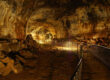
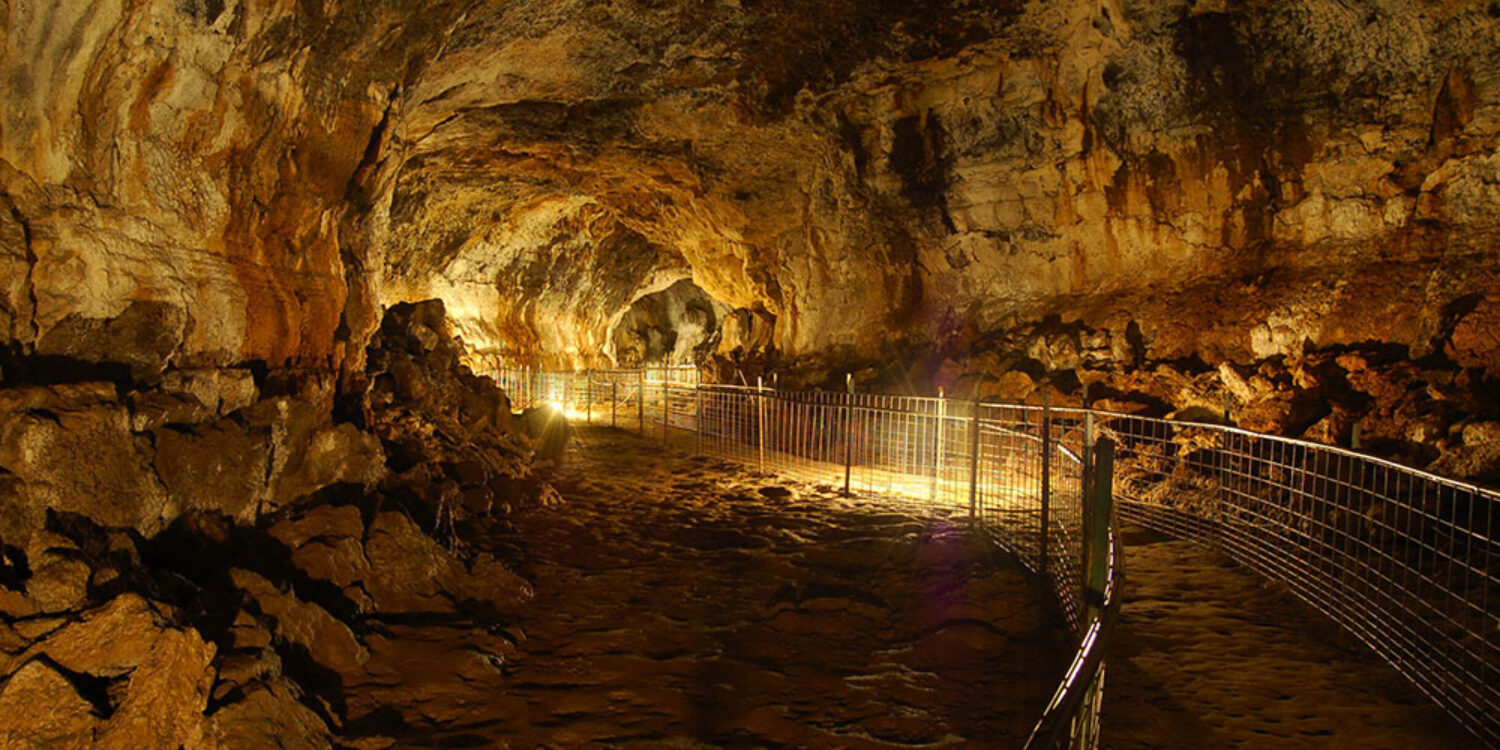
Stepping into Idaho’s Mammoth Cave, the first thing you notice is the temperature drop and the darkness. As your eyes adjust and the lantern lights the way, the scale of the cave becomes apparent. The ceiling rises. The walls stretch wide. It’s larger than most people expect.
The cave walls are covered in places with cyanobacteria, ancient living organisms that give the rock an ethereal silver glow. Idaho’s Mammoth Cave is among only a few caves in the world where this growth exists on the walls. The organisms date back almost four billion years, to a time when the Earth’s climate was vastly different. Alongside the cyanobacteria, mineral deposits streak the cavern walls in gold, orange, and red. The combination makes for a visual experience that’s genuinely hard to describe from the outside.
Discovery & Exploration

Early sheepherders stumbled upon Idaho’s Mammoth Cave in 1902 and left their names written on the walls. The cave remained largely unknown beyond the local area until 1954, when Richard Arthur Olsen rediscovered it by accident while bobcat hunting in the area. The cave was so remarkable that he devoted much of his life to sharing it with the world.
Olsen opened the cave to the public and established the Shoshone Bird Museum of Natural History on the same property. He raised mushrooms in the cave for several years before the public tours began. Over time, the site grew into the destination it is today, drawing thousands of visitors from around the world each year.
The Legacy of Richard Arthur Olsen

The two museums on the property stand as a tribute to Richard Arthur Olsen’s lifelong passion for the natural world. Known as the Smithsonian of the Desert, they house an extensive collection that spans continents and centuries.
The Shoshone Bird Museum of Natural History is housed in a round building constructed of natural, uncut lava rock, four feet thick. Inside, thousands of unusual and rare items line the walls and ceiling. Mounted birds, fossils, ancient pottery, Native American artifacts, animal taxidermy, cultural artifacts, and geological specimens from around the world share space in a collection assembled over decades by three generations of the Olsen family.
The Richard Arthur Olsen Museum of Natural History adds a second building of exhibits, further expanding the scope of the collection. Together, they give context to the cave itself and to the volcanic and natural history of the surrounding Snake River Plain.
A Cold War Relic Turned Tourist Attraction

During the Cold War, the United States government identified Idaho’s Mammoth Cave as a potential nuclear fallout shelter. The nearby Mountain Home Air Base was home to a fleet of B-52 bombers carrying hydrogen bombs, making it a likely target in the event of a nuclear attack. The government approached Richard Olsen and asked him to use the cave as a civil defense shelter capable of housing 8,000 people. In exchange, they graveled a good road to the cave and stored food and supplies inside on a large platform for approximately 20 years.
A sign at the cave entrance still bears the radiation warning symbol and the words Fallout Shelter. After the road was built, Olsen used it to open the cave to the public. The road that made Idaho’s Mammoth Cave accessible to visitors exists largely because the Cold War made it strategically valuable.
Visiting Idaho’s Mammoth Cave

The self-guided tour covers a quarter mile into the cave and a quarter mile back out, following an established trail with signage along the way. Lanterns are provided at the entrance. The tour takes about 30 minutes for the cave itself. Budget an additional 30 to 60 minutes for the two museums on the property. Most visitors spend between one and one and a half hours total on site.
The cave temperature stays at 42 degrees year-round. A light jacket is recommended regardless of the season or the outside temperature. Comfortable walking shoes are advised as the ground is uneven in places. Reservations are not required.
A Few Things to Know Before You Go

- Hours: Starting in May, Idaho’s Mammoth Cave is open daily from 10 a.m. to 6 p.m., 7 days a week, including major holidays, with last entry at 5 p.m. After Labor Day, hours shift to weekends only on Fridays, Saturdays, and Sundays before closing for the season at the end of September.
- Admission: Adults $15. Ages 12 and under $9. Ages 5 and under free. One admission price covers all three attractions — the cave tour, the Shoshone Bird Museum, and the Richard Arthur Olsen Museum of Natural History.
- Temperature: The cave maintains a constant 42 degrees year-round. Bring a light jacket regardless of the season.
- Footwear: Comfortable walking shoes with good grip are recommended for the cave trail.
- Accessibility: Idaho’s Mammoth Cave is not handicap accessible.
- Dogs: Dogs are not allowed on the property.
- Parking: A large gravel parking lot accommodates vehicles of all sizes, including RVs.
- Road: The gravel road from Highway 75 to the cave entrance is approximately one mile. Take it slow.
Nearby Attractions

- Shoshone Falls: About 35 minutes south near Twin Falls. Often called the Niagara of the West, Shoshone Falls drops 212 feet into the Snake River Canyon and is one of the most visited natural landmarks in Idaho.
- Snake River Canyon: About 35 minutes south near Twin Falls. A 500-foot deep canyon stretching more than 50 miles through the Magic Valley, with hiking, kayaking, BASE jumping, and canyon rim views.
- Craters of the Moon National Monument: About an hour northeast on U.S. 93 to Highway 20. A vast volcanic landscape of lava flows, cinder cones, and lava tube caves that shares geological origins with Idaho’s Mammoth Cave.
- Hagerman Fossil Beds National Monument: About 45 minutes southwest near Hagerman. One of the world’s richest deposits of Pliocene-era fossils, including the Hagerman Horse, an ancestor of the modern horse, preserved along the Snake River Canyon corridor.
Why Idaho’s Mammoth Cave Is a Beautiful Place to Visit in Idaho

Idaho is full of beautiful landscapes, but very few of them exist underground. That’s what sets Idaho’s Mammoth Cave apart. The silver glow of the cyanobacteria on the walls, the mineral streaks in gold, orange, and red, and the sheer scale of the lava tube create a kind of beauty that’s rare anywhere in the world, let alone in Idaho.
What makes it worth going out of your way for is the combination of things in one place. A genuine volcanic lava tube that’s among the largest open to the public in the country. Two museums that a family spent three generations building in the middle of the Idaho desert. A Cold War fallout shelter with the original warning sign still on the door. A story that starts with a volcanic eruption millions of years ago and winds through Native American history, a Cold War relic, and one man’s lifelong mission to share it all with the world. For anyone looking for beautiful places to visit in Idaho that go beyond the obvious, Idaho’s Mammoth Cave is exactly that.
For a complete statewide travel guide, see our Idaho travel and attractions guide.
10 Quick Facts About Idaho’s Mammoth Cave
- Location: Eight miles north of Shoshone, Idaho on Highway 75 at 251 W Thorn Creek Road. Follow the gravel road approximately one mile west of the highway to the cave entrance.
- Size: One of the largest volcanic lava tubes open to the public in the United States.
- Formation: Created by a violent volcanic eruption millions of years ago. Molten lava filled a valley an estimated 600 feet deep before flowing on and leaving a hollow tube behind.
- Temperature: A constant 42 degrees year-round inside the cave, summer and winter.
- Cyanobacteria: The cave walls carry cyanobacteria, ancient living organisms dating back nearly four billion years. Idaho’s Mammoth Cave is among only a few caves in the world with this growth on its walls.
- Discovery: Richard Arthur Olsen discovered the cave in 1954 while bobcat hunting, exploring it for the first time with just a single flashlight alongside his high school sweetheart. Sheepherders had found it earlier in 1902 and left their names on the walls.
- Cold War History: The U.S. government designated the cave as a nuclear fallout shelter during the Cold War, storing food and supplies for 8,000 people inside for approximately 20 years. The original radiation warning sign is still posted at the entrance.
- Self-Guided Tour: Visitors explore at their own pace with lanterns provided. Bringing your own flashlight is always a good idea. The trail covers a quarter mile in and a quarter mile out and takes about 30 minutes.
- Museums: Two natural history museums on the property — the Shoshone Bird Museum, the largest private museum of its kind in the Northwest, and the Richard Arthur Olsen Museum, house three generations of Olsen family collections, including fossils, taxidermy, cultural artifacts, gemstones, and specimens from around the world, earning the nickname the Smithsonian of the Desert.
- Season: Open May 1st through the end of September. Daily from 10 a.m. to 6 p.m. through Labor Day, then weekends only on Fridays, Saturdays, and Sundays through the end of September.
FAQs About Idaho’s Mammoth Cave
Idaho’s Mammoth Cave is one of southern Idaho’s most distinctive natural attractions and one that visitors often have questions about before making the trip. Here are the most common ones.
What is Idaho’s Mammoth Cave?
Idaho’s Mammoth Cave is a natural volcanic lava tube located eight miles north of Shoshone, Idaho, on Highway 75. It’s one of the largest volcanic caves open to the public in the United States. Visitors explore the cave on a self-guided tour covering a quarter mile underground, with lanterns provided at the entrance. The property also includes two natural history museums on site.
How long does a visit to Idaho’s Mammoth Cave take?
The cave tour itself takes about 30 minutes. The two museums on the property each take an additional 30 minutes or more, depending on your interest. Most visitors spend between one and one and a half hours total on site, though it’s easy to linger longer in the museums.
Is Idaho’s Mammoth Cave good for kids?
Yes. The self-guided format lets families move at their own pace. The cave trail is established and well-marked. The museums are filled with fossils, taxidermied animals, and cultural artifacts that tend to hold kids’ attention well. Children 5 and under are admitted free. Ages 12 and under are $9.
What should I wear to Idaho’s Mammoth Cave?
The cave maintains a constant 42 degrees year-round. A light jacket is recommended for everyone, regardless of the outside temperature. Comfortable walking shoes with good grip are advised as the cave floor is uneven in places. Bringing your own flashlight in addition to the provided lantern is always a good idea.
Do I need a reservation to visit Idaho’s Mammoth Cave?
No. Reservations aren’t required. The cave operates on a walk-in basis during open hours. Please arrive before 5 p.m. for the last tours of the day.
When is Idaho’s Mammoth Cave open?
The cave is open seasonally from May 1st through the end of September. From May 1st through Labor Day, hours are 10 a.m. to 6 p.m. daily, 7 days a week, including major holidays, with last entry at 5 p.m. After Labor Day, the cave is open weekends only on Fridays, Saturdays, and Sundays through the end of September.
What else is there to do at Idaho’s Mammoth Cave?
In addition to the cave tour, the property includes two natural history museums — the Shoshone Bird Museum and the Richard Arthur Olsen Museum of Natural History. Together, they house thousands of items, including fossils, mounted birds and animals, ancient pottery, Native American artifacts, gemstones, and cultural specimens from around the world. The Shoshone Bird Museum is the largest private museum of its kind in the Northwest and has earned the nickname the Smithsonian of the Desert.
How far is Idaho’s Mammoth Cave from Twin Falls?
Idaho’s Mammoth Cave is about 35 minutes north of Twin Falls. From Twin Falls, take U.S. 93 north to Highway 75 north toward Shoshone. The cave is eight miles north of Shoshone off Highway 75.
Is Idaho’s Mammoth Cave handicap accessible?
No. Idaho’s Mammoth Cave is not handicap accessible. The cave trail involves uneven ground and natural cave conditions.