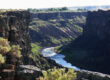


Most people have heard of Niagara Falls. Fewer people outside Idaho know about Shoshone Falls, even though it’s 45 feet taller. At 212 feet high and nearly 900 feet wide, it drops off the rim of the Snake River Canyon about three miles northeast of Twin Falls in one of the most powerful displays of moving water in the American West. Often called the Niagara of the West, it’s one of the most beautiful places to visit in Idaho and one that tends to leave a stronger impression than people expect.
Where It Is and How to Get There
Shoshone Falls is located at 4155 Shoshone Falls Grade Road in Twin Falls, Idaho, about three miles northeast of the city center. From the Perrine Bridge on the north edge of Twin Falls, the falls are about five miles east along the canyon rim.
The road into the park is paved but narrow and winding as it descends into the canyon. Take it slow, especially in larger vehicles. A concessions stand, restrooms, and public parking are all available near the falls.
The Falls Themselves

Shoshone Falls drops 212 feet over a horseshoe-shaped basalt cliff nearly 900 feet wide. The Snake River narrows above the falls before spreading out across the full width of the rim and plunging into the canyon below.
What makes Shoshone Falls genuinely interesting is how dramatically it changes throughout the year. In spring, when snowmelt pushes down from the Rockies near Yellowstone and Grand Teton, the falls can run at 10,000 to 12,000 cubic feet per second in a typical year. In exceptional years, flows have exceeded 20,000 cubic feet per second. The falls look like a solid wall of water stretching the full width of the canyon.
By late summer and fall, that picture changes considerably. Water is diverted upstream at Milner Dam for irrigation across nearly two million acres of farmland in the Snake River Plain. Idaho Power’s hydroelectric plant directly above the falls diverts additional water. The result is that by late summer the falls can slow to a fraction of their spring volume, and in dry years they can nearly stop. Idaho Power is required to maintain a minimum daytime scenic flow of 300 cubic feet per second from April through Labor Day, but even that can be difficult to achieve in low water years.
Knowing this before you visit helps set the right expectations. Spring is when the falls are at their most powerful and most visited. Fall and winter visits offer a quieter experience with a different kind of beauty.
Shoshone Falls History

Shoshone Falls was formed about 14,000 years ago by the catastrophic outburst flooding of Lake Bonneville during the last Ice Age. The same flood event that shaped much of southern Idaho’s canyon system carved the falls into the basalt rock of the Snake River Canyon.
For thousands of years before European contact, the falls marked the historical upper limit of salmon migration in the Snake River. The Lemhi Shoshone, for whom the falls are named, considered the site sacred. It was an important fishing and trading place for Native American tribes throughout the region.
European explorers documented the falls as early as the 1840s and by the 1860s the falls had become a tourist destination despite their remote location. Travelers on the Oregon Trail would detour to see them. By the early 20th century, hydroelectric development began changing the falls significantly. The Shoshone Falls Power Plant was completed in 1907, and a diversion dam was built directly upstream, reducing the water flowing over the falls ever since.
In 1932, Frederick and Martha Adams donated the surrounding land to the City of Twin Falls with the stipulation that it be maintained as a public park. The City of Twin Falls has owned and operated the park ever since.
What to Do at the Park
Shoshone Falls Park offers more than just the falls themselves. The $5 per vehicle entry fee covers access to the full park complex for the day, including Dierkes Lake and the Canyon Rim Trail.
- Viewing Platforms and Overlooks: Multiple viewpoints throughout the park look out over the falls and the Snake River Canyon. The main viewing area is accessible and close to the parking lot. Permanent telescopes are available along the rim for a closer look. On sunny days, the mist from the falls creates rainbows that are visible from the viewing platforms.
- Canyon Rim Trail: A paved multi-use trail runs more than eight miles along the south rim of the Snake River Canyon from Shoshone Falls west toward the Perrine Bridge. The trail connects to the broader Twin Falls trail system and offers multiple canyon overlooks along the way.
- Dierkes Lake: Located within the park complex, Dierkes Lake offers swimming, fishing, paddleboarding, and hiking on surrounding trails. Dogs are welcome at the park but are not permitted in the grassy areas near Dierkes Lake.
- Picnic Areas: The park has shaded picnic areas with tables, grills, and grassy lawns. It’s a genuine family destination, not just a scenic overlook.
- Boat Ramp: A boat ramp provides river access for those bringing watercraft.
- Shoshone Falls After Dark: An annual spring event featuring a light show projected onto the falls and canyon walls, paired with music and food vendors. Worth checking the City of Twin Falls events calendar if you’re visiting in spring.
A Few Things to Know Before You Go

- Fees: $5 per vehicle from March through fall. The fee is waived in winter. Season passes are available for $25 at the park entrance or Twin Falls City Hall.
- Hours: Open from dawn to dusk. Road access may be limited during severe winter weather.
- Accessibility: The park is ADA accessible with paved paths and accessible parking near the falls. The main viewing platform is accessible without stairs.
- Pets: Dogs are welcome on leash throughout most of the park. Not permitted in the grassy areas near Dierkes Lake.
- Flow: Check current flow rates on the City of Twin Falls website before visiting in summer or fall. The falls can be significantly reduced or nearly dry during low water years.
- Road: The road into the canyon is narrow and winding. Take it slow and drive with care, especially in larger vehicles or RVs.
Seasons at Shoshone Falls
Spring
Spring is the best time to visit and the most popular season. April is the most consistent month for high water. The falls run at full power, the mist is heavy, and rainbows are common on clear days. The surrounding canyon is vivid green. Plan to arrive early on weekends as the parking area fills quickly during peak spring flows.
Summer
Summer water levels drop as irrigation diversions increase upstream. The falls are still worth seeing but look noticeably different from spring. The park’s facilities, picnic areas, and Dierkes Lake make it a full-day family destination even when the water is lower. The Shoshone Falls After Dark event typically takes place in spring and carries into early summer.
Autumn
Fall brings lower water and smaller crowds. The falls can slow considerably in dry years. The canyon views remain striking and the cooler temperatures make the rim trail more comfortable to walk. It’s a quieter visit with a more subdued version of the falls.
Winter
The park remains open in winter but road access can be affected by snow and ice. The vehicle fee is waived. The falls take on a spare, quiet quality in winter and the canyon is largely empty. Worth a stop if you’re in the area and the roads are clear.
Nearby Attractions

- Perrine Bridge: About five miles west along the canyon. The bridge stands 486 feet above the Snake River and is the only place in the United States where BASE jumping is legal year-round without a permit.
- Perrine Coulee Falls: Just off Canyon Springs Road on the descent toward Centennial Waterfront Park. A nearly 200-foot waterfall drops off the canyon rim and visitors can walk directly behind it.
- Pillar Falls: A short kayak or hike from the Centennial Waterfront Park area. A series of basalt pillars and cascades on the Snake River worth seeking out.
- Dierkes Lake: Within the Shoshone Falls Park complex. Swimming, fishing, paddleboarding, and hiking.
- Idaho’s Mammoth Cave: About 35 minutes northeast near Shoshone. A self-guided tour through one of the largest volcanic lava tubes open to the public in the United States.
Why Shoshone Falls is a Beautiful Place to Visit in Idaho

Shoshone Falls is one of those places that’s hard to fully appreciate from a photograph. The width of it, the way the mist rises into the canyon air, and the sound of the water hitting the pool below don’t translate well to a screen. Standing at the rim and watching it in spring when the flow is running full is a different experience entirely.
The falls have been drawing visitors since the 1860s for good reason. They’re taller than Niagara, wider than most people expect, and set inside one of the most dramatic river canyons in the American West. For anyone seeking beautiful places to visit in Idaho, Shoshone Falls is an absolute must.
Quick Facts About Shoshone Falls
- Height: Shoshone Falls drops 212 feet, making it 45 feet taller than Niagara Falls.
- Width: The falls stretch nearly 900 feet across a horseshoe-shaped basalt cliff.
- Nickname: Often called the Niagara of the West, Shoshone Falls is one of the largest natural waterfalls in the United States.
- Formation: The falls were formed approximately 14,000 years ago by the catastrophic outburst flooding of Lake Bonneville during the last Ice Age.
- Flow Variability: Spring flows typically peak between 10,000 and 12,000 cubic feet per second in a normal year. In exceptional years, flows have exceeded 20,000 cubic feet per second. By late summer the falls can slow to near nothing in dry years.
- History: The Lemhi Shoshone considered the site sacred. It served as the historical upper limit of salmon migration in the Snake River and was an important fishing and trading location for Native American tribes for thousands of years.
- Park Donation: Frederick and Martha Adams donated the surrounding land to the City of Twin Falls in 1932 with the stipulation it be maintained as a public park.
- Fees: $5 per vehicle from March through fall. Season passes available for $25. Fee waived in winter.
- Hydroelectric Power: The Shoshone Falls Power Plant, completed in 1907, diverts water from directly above the falls for hydroelectric generation, significantly reducing flow over the falls year-round.
- Best Time to Visit: April is the most consistent month for high water. Spring in general offers the most powerful display and the best chance of seeing rainbows in the mist.
Idaho’s Mammoth Cave

Planning a trip through Idaho? Idaho’s Mammoth Cave is a stop worth adding along the way. This unique destination lets you explore a naturally formed underground lava tube at your own pace, giving you a chance to experience something completely different from Idaho’s rivers, parks, and trails.
Along with the cave, you’ll also find two privately owned natural history museums on-site, the Shoshone Bird Museum and the Richard Arthur Olsen Museum. Together, they feature a wide range of exhibits that have earned the nickname “The Smithsonian of the Desert,” making it a memorable stop for visitors of all ages. Located eight miles north of Shoshone along Highway 75, the cave is open seasonally from May through October, from 10 a.m. to 6 p.m., with last tours at 5 p.m., seven days a week, including major holidays. For more information, visit idahosmammothcave.com or call (208) 329-5382.
For a complete statewide travel guide, see our complete guide to things to do in Idaho.
Commonly Asked Questions About Shoshone Falls
Shoshone Falls is one of the most visited natural attractions in Idaho and one of the most searched. Here are answers to the questions visitors ask most before making the trip.
When is the best time to visit Shoshone Falls?
Spring is the best time to visit Shoshone Falls. April is the most consistent month for high water, when snowmelt from the Rocky Mountains pushes the Snake River to its seasonal peak. During a typical spring, the falls run between 10,000 and 12,000 cubic feet per second. In exceptional years, flows have exceeded 20,000 cubic feet per second. Arriving early on spring weekends is recommended as the parking area fills quickly during peak flow season.
How much does it cost to visit Shoshone Falls?
Shoshone Falls charges a $5 per vehicle entry fee from March through fall. The fee covers full access to the park complex for the day, including Dierkes Lake and the Canyon Rim Trail. Season passes are available for $25 at the park entrance or Twin Falls City Hall. The vehicle fee is waived during winter months.
Is Shoshone Falls worth visiting in summer?
Yes, but it’s worth knowing what to expect. Water levels drop significantly in summer as the Snake River is diverted upstream for irrigation across nearly two million acres of farmland. The falls can look dramatically different from their spring peak. That said, the park’s picnic areas, Dierkes Lake, hiking trails, and canyon views make it a worthwhile full-day destination even when the water is lower. Checking current flow rates on the City of Twin Falls website before visiting in summer is a good idea.
How tall is Shoshone Falls compared to Niagara Falls?
Shoshone Falls drops 212 feet, making it 45 feet taller than Niagara Falls. At nearly 900 feet wide, it’s also one of the broadest natural waterfalls in the United States. That combination of height and width is part of what earned it the nickname the Niagara of the West, though by most measures Shoshone Falls is the more impressive of the two.
Is Shoshone Falls free?
Shoshone Falls is not free during the main visiting season. A $5 per vehicle fee applies from March through fall and covers access to the full park complex, including Dierkes Lake and the Canyon Rim Trail. The fee is waived during the winter months. Season passes are available for $25 for frequent visitors.
Can you swim at Shoshone Falls?
Swimming is not permitted in the Snake River directly at Shoshone Falls. However, Dierkes Lake, located within the Shoshone Falls Park complex, offers a designated swimming area. Dierkes Lake also has fishing, paddleboarding, and hiking trails. It’s included in the $5 per vehicle park entry fee and is a popular option for families visiting the falls.
How far is Shoshone Falls from Twin Falls?
Shoshone Falls is located about three miles northeast of downtown Twin Falls. The drive from the city center takes roughly ten minutes. From the Perrine Bridge on the north edge of Twin Falls, the falls are about five miles east along the canyon rim. The address is 4155 Shoshone Falls Grade Road, Twin Falls, Idaho.
Is Shoshone Falls accessible for wheelchairs?
Yes. Shoshone Falls Park is ADA accessible with paved paths and accessible parking located near the falls. Multiple viewpoints throughout the park can be reached without stairs. The main viewing area provides a clear view of the falls and is reachable from the accessible parking area. Visitors with mobility needs should note that some of the dirt trails within the park are not paved.