Key Takeaways
- The Soda Springs Geyser is the only captive geyser in the world
- It erupts every hour on the hour, making it easy to time your visit
- The geyser shoots water up to 70 to 100 feet into the air
- It was accidentally discovered while drilling for a swimming pool in 1937
- The surrounding park offers a relaxed, family-friendly experience with no entrance fee
At Idaho’s Mammoth Cave, we’re passionate about helping visitors discover the experiences that make Idaho unlike anywhere else. From our self-guided lava tube cave near Shoshone to unexpected gems like Soda Springs Geyser, this state has a way of surprising you at every turn. That’s why we’ve put together our statewide Idaho guide to help you plan a trip that goes beyond the obvious stops.
One of Idaho’s Most Surprising Attractions

If you’re looking for something different that still feels easy and accessible, Soda Springs Geyser checks every box. It’s one of those places where you don’t have to hike for miles or guess when something might happen. You show up, you wait a few minutes, and then the ground suddenly comes alive right in front of you.
For anyone planning a trip through southeastern Idaho, this is one of those stops that adds something unexpected to your itinerary. If you’re already mapping out your route, take a moment to explore the most unique things to do in Idaho and see how easily this fits into a full day of adventure.
What Makes Soda Springs Geyser So Unique
Most geysers are natural and unpredictable. You wait, sometimes for hours, hoping to catch an eruption. This one is completely different.
Soda Springs Geyser is controlled by the city and set on a timer, which means it erupts every single hour. That alone makes it one of the most visitor-friendly natural attractions you’ll find.
But what really sets it apart is how it was discovered. Back in 1937, a group of locals were drilling deep into the ground, hoping to find hot water for a bathhouse. Instead, they hit a pocket filled with carbon dioxide gas and water. Suddenly, water shot up into the air, creating what would become one of Idaho’s most unexpected attractions. It wasn’t planned. It wasn’t designed. It just happened. And today, that same eruption still draws people in.
The Experience: Waiting for the Eruption

“Soda Springs Geyser, Soda Springs, Idaho” by Ken Lund is licensed under CC BY-SA 2.0.
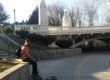
There’s something fun about knowing exactly when something will happen and still feeling surprised when it does. When you arrive at the park, you’ll notice how calm everything feels. There’s a boardwalk that wraps around the geyser, giving you a safe place to walk and watch from different angles.
Families spread out on the grass. Kids run around while parents keep an eye on the clock. Some people grab a seat on a bench, while others slowly circle the geyser, trying to decide where they want to stand when it goes off.
Then, right on time, you hear it first.
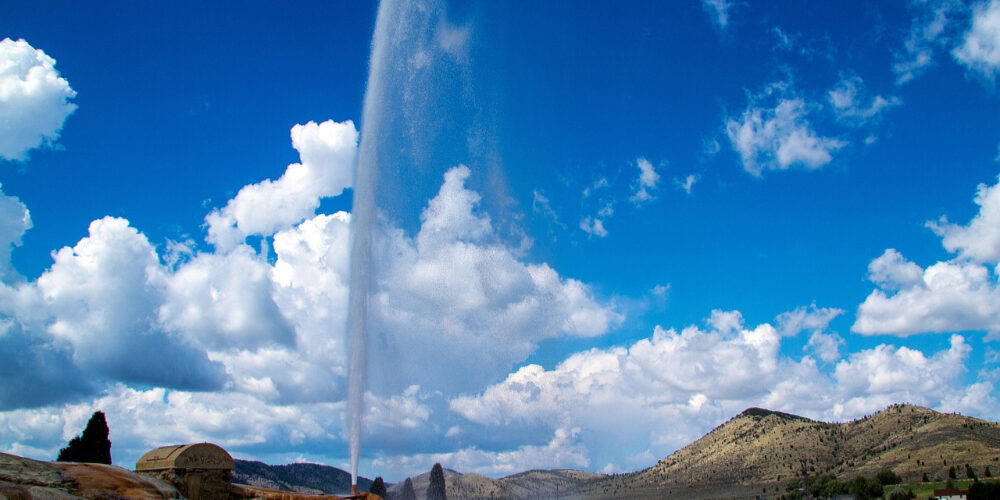
A low rumble builds under your feet. The ground starts to feel alive. And before you can fully process what’s happening, water shoots straight up into the air.
It’s loud. It’s powerful. And it feels closer than you expect.
What You’ll See During the Eruption

When the geyser erupts, it doesn’t just trickle or bubble. It launches water high into the air, often reaching heights between 70 and 100 feet.
The spray catches the light, creating a mist that drifts across the park. If you’re standing close enough, you’ll feel it on your face. It’s cool, refreshing, and a little unexpected, especially on a warm Idaho day.
The sound is just as memorable as the view. One early developer described it as roaring like a dragon, and that’s honestly a pretty accurate way to put it.
The eruption usually lasts several minutes, giving you time to walk around and see it from different sides. You can move along the boardwalk, watch how the water falls, and take in the full scale of it. It’s not something you rush through. You stay for a bit. You watch. You take it in.
A Park That Makes It Easy to Stay Longer

“Soda Springs Geyser, Soda Springs, Idaho” by Ken Lund is licensed under CC BY-SA 2.0.
One of the best parts about Soda Springs Geyser is how easy it is to enjoy without feeling rushed. The park is set up with picnic tables, grassy areas, and benches, so you can settle in and spend some time there.
You don’t need to plan a whole day around it, but you easily could. Some visitors come for the eruption and end up staying longer, relaxing in the park or waiting for the next one just to see it again.
There’s also a visitor center nearby with interpretive signs that explain how the geyser works and what makes the area unique. It’s simple. It’s low-key. And that’s exactly what makes it enjoyable.
The Story Behind the Geyser

“Soda Springs Geyser, Soda Springs, Idaho” by Ken Lund is licensed under CC BY-SA 2.0.
What makes this place even more interesting is the story behind it. The geyser didn’t exist in the way we see it today until people started drilling. After hitting that underground chamber, water and gas forced their way to the surface, creating a powerful eruption that caught everyone off guard.
At one point, it was erupting so strongly that officials were actually asked to shut it down because it was interfering with another famous geyser’s schedule.
Over time, the geyser was capped and controlled so it could be used as a reliable attraction. Today, it’s released on a schedule, which allows visitors to experience it without any guesswork.
It’s one of those rare situations where human activity and natural forces came together to create something completely unique.
What Makes the Water Different

There’s another detail that most people don’t notice right away. The water coming from the geyser is considered soft water, which is unusual for this region. In an area where hard water is common, this stands out. It’s just another reminder that what’s happening underground here is a little different from what you’d expect. And it ties back to the same forces that created the geyser in the first place.
Things to Do Around Soda Springs, Idaho

While the geyser is the main attraction, there’s more to explore nearby if you want to turn your stop into a full outing. Soda Springs has several mineral springs, including Hooper Springs, where you can actually taste naturally carbonated water right from the source.
There’s also a strong connection to the Oregon Trail, with nearby landmarks and historical sites that tell the story of travelers who passed through this area long before roads and highways existed.
If you’re in the mood for something more active, Alexander Reservoir offers boating, fishing, and open space to enjoy the outdoors. It’s the kind of place where you can keep things simple or add more stops depending on how your day unfolds.
Additionally, Lava Hot Springs is another popular stop along the way that pairs perfectly with a visit to Soda Springs. Known for its natural hot pools, this small town gives you a chance to relax and soak in mineral-rich water after a day of exploring. It’s an easy way to turn your trip into a full-day experience, especially if you’re looking to slow down and enjoy a different side of Idaho.
Fun Facts About Soda Springs Geyser
- It’s the only captive geyser in the world
- It erupts every hour on a set schedule
- It was discovered by accident in 1937
- Early eruptions reached over 100 feet in the air
- The geyser releases thousands of gallons of water per minute
- The water temperature is around 72 degrees
- It’s completely free to visit year-round
Why It Belongs on Your Idaho Travel List

Idaho is full of places that feel raw and untouched. You’ll find lava fields, caves, waterfalls, and open landscapes that stretch for miles.
What makes Soda Springs Geyser stand out is how easy it is to experience something memorable without a lot of effort. You don’t need special gear. You don’t need a long hike. You just show up, wait a few minutes, and watch something powerful happen right in front of you. It’s simple, but it sticks with you.
If you’re planning a trip through Idaho, this is one of those places worth adding to your route. Take your time, enjoy the moment, and see how it fits into your own list of must-see stops across the state.
Idaho’s Mammoth Cave

Planning a trip to Idaho? Make sure Idaho’s Mammoth Cave is on your list. As one of the state’s most unique attractions, you can explore a naturally formed underground lava tube at your own pace with a self-guided tour. Beyond the cave, visitors can also explore two privately owned natural history museums on-site, the Shoshone Bird Museum and the Richard Arthur Olsen Museum. With a wide range of exhibits, it’s easy to see why this collection has earned the nickname “The Smithsonian of the Desert,” making it a memorable stop for all ages.
Located eight miles north of Shoshone, Idaho, on Highway 75, Idaho’s Mammoth Cave is open seasonally from May through October, from 10 a.m. to 6 p.m., with last tours at 5 p.m. The site is open seven days a week, including major holidays. For more information, visit idahosmammothcave.com or call (208) 329-5382.
For a complete statewide travel guide, explore our full guide to things to do in Idaho.
FAQs About Soda Springs Geyser
If you’re planning a visit, here are a few common questions people often ask.
How often does Soda Springs Geyser erupt?
It erupts every hour on the hour, making it easy to plan your visit without waiting long.
Is Soda Springs Geyser natural or man-made?
It was created accidentally during drilling, but the eruption is now controlled by the city using a timer.
How tall does the geyser get?
It typically reaches between 70 and 100 feet during an eruption.
Is there an entrance fee?
No, the geyser is completely free to visit year-round.
How long does the eruption last?
Eruptions usually last several minutes, giving you time to walk around and view it from different angles.
Is Soda Springs Geyser family-friendly?
Yes, the park is set up with boardwalks and open space makes it easy for families to enjoy.
What else can you do near Soda Springs?
You can visit mineral springs, explore historic sites, or spend time at nearby reservoirs for outdoor recreation.